

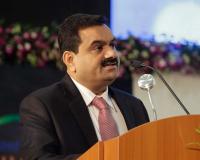
Addressing more than 400,000 employees on the occasion of International Workers' Day, Adani stated that the initiative is not merely an infrastructure project but potentially “the world’s largest and most challenging endeavour in human transformation.” During the address, he also announced the launch of a new internal communication initiative titled “Apni Baat, Apno Ke Saath,” translated as “Our Voice, With Our People.”
Located in Dharavi, widely regarded as Asia’s largest slum and one of the most densely populated urban settlements in Mumbai, the redevelopment project has been framed as both a professional responsibility and a deeply personal commitment by Adani. He acknowledged the magnitude of the task, stating that the decision was not driven by profit motives but by a recognition of systemic shortcomings. He described Dharavi as a symbol of collective failure in providing equitable living conditions.
Highlighting the resilience of Dharavi’s residents, Adani emphasized their determination, hard work, and perseverance despite enduring hardships. He noted that these qualities have long been a source of inspiration, while also underscoring the need to deliver improved living standards that residents rightfully deserve.
The project is being executed through a Special Purpose Vehicle under a public-private partnership framework, forming a joint venture between the Adani Group and the Maharashtra government. It has been positioned as the largest urban rejuvenation project in the world and a foundational step toward making Mumbai free of slums.
Under the current framework, all eligible residential units in Dharavi are to be rehabilitated into apartments with independent kitchens and toilets, each with a minimum area of 350 square feet. This provision is 17 percent larger than the standard allocation in Mumbai’s existing slum redevelopment schemes, making it the most generous offering in the city.
The Dharavi Redevelopment Project stands as a critical test of large-scale urban transformation, blending infrastructure, social rehabilitation, and policy execution. Its success or failure will likely shape the future of redevelopment models not only in Mumbai but across densely populated urban regions in India.
About The Author









Comment List